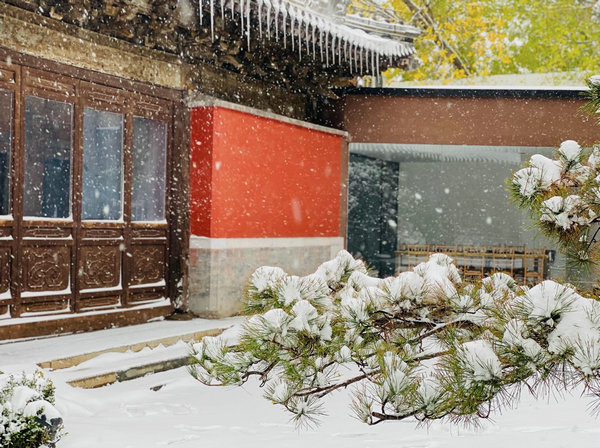
Chinese Courtyard
Overview
The Chinese Courtyard, commonly referred to as "siheyuan", is a traditional form of residence that has been prevalent in Chinese architecture for centuries. Characterized by its unique layout, the "siheyuan" comprises a square or rectangular open space enclosed by buildings on all four sides.
Originating in northern China, this architectural style has become synonymous with Beijing, where many of the city's "hutong", or narrow alleys, feature these iconic courtyard homes. The design is not only a reflection of traditional Chinese aesthetics but also of familial and social structures, emphasizing harmony and unity within a shared living space.
Historical Context
The origins of the "siheyuan" can be traced back to the Western Zhou Dynasty (c.11th century-771 BC), although the form it is recognized today primarily developed during the Ming (1368–1644) and Qing (1644–1911) dynasties. During these periods, the courtyard layout became standardized, reflecting the Confucian ideals of hierarchical order and family values.
The layout of "siheyuan" is deeply influenced by traditional Chinese philosophical concepts, particularly “fengshui", which emphasizes harmony between humans and their surroundings. The orientation of the courtyard is typically aligned with the cardinal directions, with the main building facing south to capture sunlight and warmth. This architectural style allowed for both privacy and communal living, as each family member had their designated space while also sharing common areas.
Architectural Features
The architectural features of "siheyuan" are defined by its symmetrical layout and functional design. Typically, a "siheyuan" consists of four buildings surrounding a central courtyard. The main building is situated at the northern end and faces south. This building often houses the head of the family and serves as the primary living space. The eastern and western wings are occupied by the younger family members or used as guest rooms and study areas. The southern building often serves as the reception area or secondary living quarters.
The buildings within a "siheyuan" are traditionally constructed using timber frames with brick or stone walls. Roofs are often adorned with grey tiles, and the eaves feature intricate woodwork that reflects the aesthetic preferences of Chinese architecture. The central courtyard serves as an open-air living space, often embellished with potted plants, rock gardens, or small ponds, creating a serene environment that encourages interaction with nature.
Cultural Significance
Siheyuan holds immense cultural significance in China as it embodies the country's traditional lifestyle, social values and aesthetic principles. The courtyard's design promotes a communal way of life, reinforcing familial bonds and social harmony. This architectural form is intrinsically linked to Chinese customs and traditions, such as ancestor worship and family gatherings, which often take place within the confines of the courtyard.
In contemporary times, "siheyuan" has become a symbol of cultural heritage and nostalgia. As urbanization and modernization threaten the existence of these ancient structures, there is a growing movement to preserve them as part of China's historical legacy. Efforts to restore and maintain "siheyuan" not only aim to protect architectural history but also to safeguard the cultural identity and collective memory of the Chinese people.
Modern Relevance
In modern China, "siheyuan" continues to hold relevance as a cultural and architectural icon. As urban landscapes evolve, there is an increasing interest in preserving these traditional courtyards as part of the nation's heritage.
The preservation of "siheyuan" aligns with broader efforts to maintain Beijing's historic hutong neighborhoods, which are seen as vital components of the city's cultural fabric.
The adaptability of "siheyuan" to modern needs is also evident in architectural innovations that merge traditional designs with contemporary living standards. Architects and designers are finding creative ways to revitalize these courtyards, ensuring they remain functional and relevant in a rapidly changing urban environment. The enduring appeal of "siheyuan" lies in its ability to bridge the past and present, preserving cultural heritage while adapting to contemporary life.
Article reference1. Hutong renovations offer more cultural avenues. chinadaily.com.cn. 20232. In the avenues and alleyways. chinadaily.com.cn. 20223. Remake initiatives revive historic hutong neighborhood. chinadaily.com.cn. 20194. Hutong life stands test of time. chinadaily.com.cn. 20225. Keeping Beijing's hutongs alive, sketch by sketch. chinadaily.com.cn. 2017ExpandPhoto Gallery(7 pictures)CategoriesLifestyleTagArchitectureRelatedTraditional Chinese CourtyardSiheyuanImperial Ancestral TempleChaoshan Ancient Architecture Construction SkillsCatalogue1. Overview2. Historical Context3. Architectural Features4. Cultural Significance5. Modern Relevance-
- []








